

Tomorrow’s world will reward people who can learn fast, work with others, and adapt without losing their values. That means education can’t be limited to memorizing content for exams; it must train the mind to question, connect ideas, and apply knowledge in real contexts. The most future-ready learning environments feel like studios and labs as much as classrooms, where students practice communication, reasoning, and responsible decision-making. When schools treat curiosity as a skill to be strengthened rather than a distraction to be controlled, students start building confidence that lasts beyond any syllabus.
Shifting from coverage to capability
Many schools still measure success by how much content gets “finished,” but the future will measure success by what students can do with what they know. In practical terms, this means lessons designed around outcomes such as explaining a concept clearly, critiquing a claim, or building a simple prototype. Even within structured curricula, educators can choose tasks that require interpretation and synthesis instead of copying. Families exploring options like a CBSE Higher Secondary School in Manipur often look for this exact shift: a clear academic pathway that also makes room for skill-building and application in everyday learning.
Learning that feels real
When learning connects to authentic problems, students stop asking, “Why do we need this?” and begin asking better questions. Real-world learning can be as simple as analyzing water usage at home, designing a budget for a community event, or writing persuasive letters to local leaders. The key is relevance: students should see how concepts move beyond textbooks into decisions and systems. Schools can build this without expensive resources by using local contexts, current events, and student interests as anchors. Over time, the result is a stronger transfer of knowledge and a more meaningful sense of purpose.
Interdisciplinary thinking as a core habit
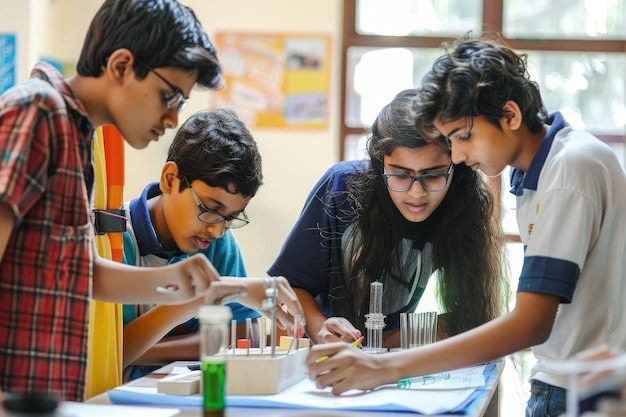
Tomorrow’s challenges won’t arrive neatly labeled as math, science, or language. They will require combined thinking: interpreting data, understanding human behavior, and communicating solutions. Interdisciplinary models encourage students to treat subjects as tools that work together. A unit on health, for instance, might blend biology, statistics, media literacy, and ethics. Students learn to identify patterns across topics, compare viewpoints, and justify choices with evidence. Done well, this approach builds flexibility while still respecting academic foundations and standards.
Personal pathways without losing structure
Personalized learning does not mean every student works alone on a screen. It means students get appropriate pacing, targeted support, and choices in how they demonstrate mastery. Some may show understanding through a presentation, others through a written analysis or a design task. Teachers can use check-ins, mini-lessons, and peer feedback to keep learners moving while preventing gaps. This balance supports confidence because students experience progress that feels earned, not accidental. It also reduces the pressure to “keep up” and instead emphasizes steady progress with accountability.
Teacher as designer, coach, and guide
In a future-ready classroom, the teacher’s role expands. Teachers still explain concepts, but they also design experiences that provoke thinking and help students practice skills repeatedly. Coaching becomes essential: giving feedback, modeling how to improve, and teaching students how to learn from mistakes. When teachers share clear success criteria and reflect with students, learning becomes visible and manageable. This approach builds trust and motivates learners who might otherwise disengage. It is especially powerful when classrooms cultivate growth in learning through consistent feedback cycles rather than one-time high-stakes judgments.
Technology with intention, not distraction
Technology can widen access and accelerate learning, but only when it is used deliberately. Future-ready models focus on digital literacy: evaluating sources, protecting privacy, collaborating online, and using tools to create rather than simply consume. Instead of assigning endless slides, schools can teach students to collect data, code small programs, edit media responsibly, and present ideas with clarity. At the same time, tech boundaries matter: attention is a limited resource, and deep work requires protected time. The best programs teach students to manage devices, not be managed by them.
Assessment that improves learning, not just labels it
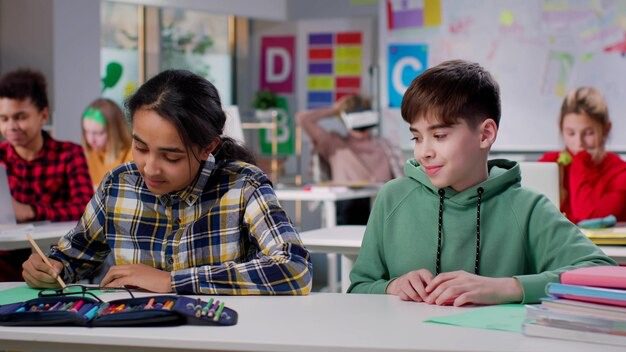
Traditional exams can test recall and procedural skills, but they rarely reveal how students think. Future-ready assessment includes performance tasks, portfolios, open-ended problems, and reflective writing. These methods show the process as well as the product. More significantly, assessment ought to be utilized as a teaching tool, assisting students in determining what they need to practice next. Rubrics, peer review, and revision cycles normalize improvement. When students revise work based on feedback, they gain resilience and ownership. This is how schools can nurture student development while still maintaining clarity, rigor, and fairness.
Well-being, belonging, and character
Preparing for tomorrow is not only academic; it is also emotional and social. Students need environments where they feel safe to speak up, ask for help, and recover from setbacks. Strong advisory systems, mentorship, and community-building routines can prevent isolation and reduce stress. Character education is most effective when it is practiced, not preached, through collaboration, service projects, conflict resolution, and ethical discussions. When students learn to listen respectfully and negotiate differences, they become better teammates and more thoughtful citizens in any career path.
Conclusion
Education models that prepare students for tomorrow share a common theme: they treat learning as a lifelong capability, not a short-term race. They blend strong foundations with authentic application, support personalization without sacrificing discipline, and value reflection as much as achievement. Whether a school is large or small, rural or urban, innovation begins with choices made daily, how questions are asked, how feedback is given, and how students are invited to think. When schools commit to relevance, rigor, and care, students graduate not only with knowledge but with the confidence to keep learning in a changing world.